Hacky Sack vs Kickit: What's the Difference
If you have ever kicked a hacky sack in a circle with friends, you already know the feeling Kickit is built on. A small object in the air, no hands allowed, and a group of people trying to keep it off the ground as long as they can. The difference shows up on the third kick. A hacky sack drops fast. It is small, dense, and unforgiving, and most people lose it before the rally gets fun. The Kickit birdie was built to fix exactly that. Same game, same circle, same no-hands rule. A slower object that floats, so you get more touches, longer rallies, and a lot more fun before it hits the ground.
What a hacky sack actually is
A hacky sack, also called a footbag, is a small round beanbag, usually crocheted and filled with plastic pellets or sand. The game is simple. Stand in a circle, kick the bag to each other, and keep it off the ground using anything except your hands. The modern game took off in Oregon in the 1970s, and by the 1980s it was a backyard and dorm room staple. It is still everywhere. You will find hacky sacks at festivals, on college quads, and in the bags of soccer players warming up before practice. It is also still hard. A hacky sack weighs only a couple of ounces and falls fast, so beginners get two or three kicks before it hits the ground. That is the whole problem, and it is the reason Kickit exists.
The three words that started Kickit
I learned this the hard way. In high school I designed soccer-style hacky sacks, got them licensed with the University of South Carolina, and produced 1,000 of them. They were called U-Hackys. My mom and dad bought two. The other 998 stayed in boxes in my old bedroom. Everyone who tried one said the same three words: it is too hard. They were right. A hacky sack punishes beginners. It drops like a stone, and if you miss one kick, the rally is over. So I rebuilt it. I took the idea apart and turned it into something closer to a badminton birdie: feathered, light, and slow in the air. The feathers catch the air and the birdie floats instead of falling. That one change turned a two-kick rally into a ten-kick rally for a brand new player. The first birdie became the SideKik. Kids kept calling it a kickit, because that is what you do with it, so the name stuck. Every product since has followed the same rule. If someone says it is too hard, make it easier, not louder.
Hacky sack vs Kickit, side by side
The object. A hacky sack is a dense little beanbag. A Kickit is a feathered birdie with a weighted rubber base. The weight sits low, the feathers sit high, and the whole thing falls base first, every time.
Speed in the air. A hacky sack drops fast and gives you a split second to react. The birdie floats. That extra hang time is the whole difference. It doubles the time you have to get your foot under it, which is why a beginner can keep a rally alive.
The learning curve. A hacky sack rewards players who already juggle well. A Kickit meets you where you are. Most people get a real rally going on their first try, and that early win is what keeps them playing.
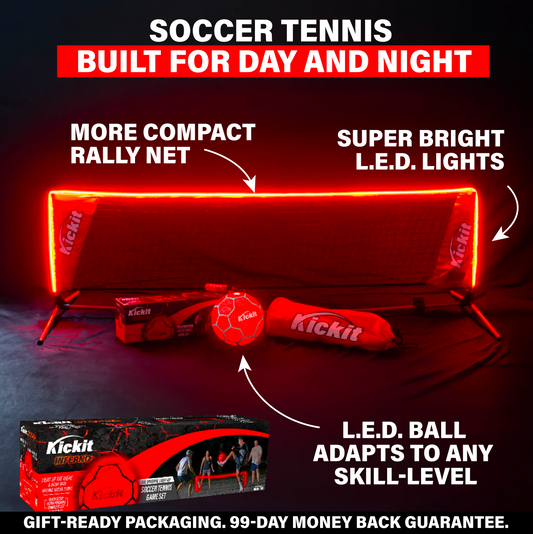
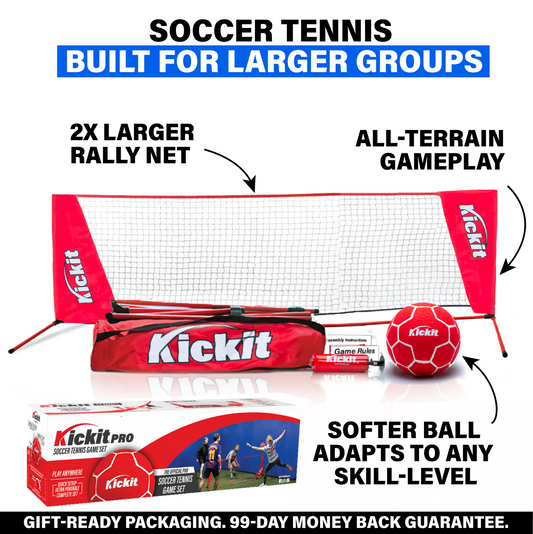
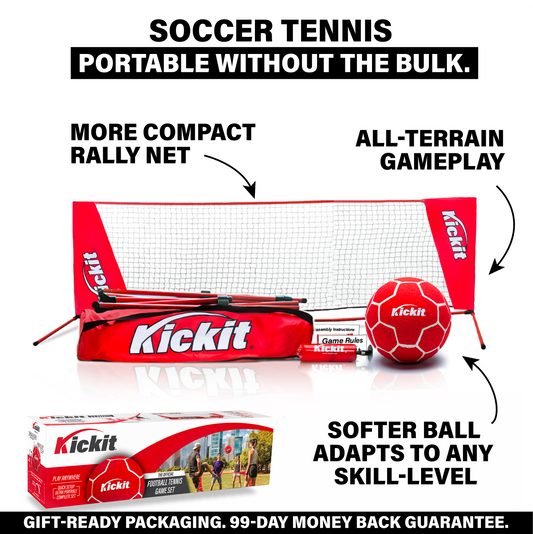
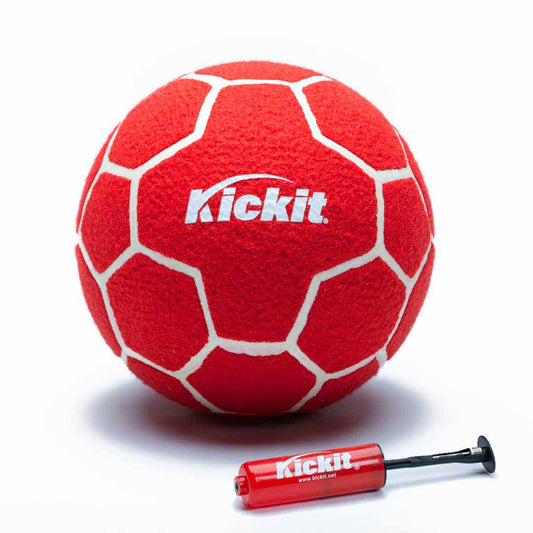
The games. Both work in a circle. The birdie also works over a net. Kick it back and forth over a net and you are playing Soccer Badminton, the game the birdie was redesigned for. Add the Soccer Tennis Ball and the net becomes a full game of Soccer Tennis, first to 11, win by 2. The hacky sack stays a circle game. The birdie grows into a sport.
What it trains. Both sharpen touch, balance, and coordination. The birdie adds one more thing. Because it floats, you practice the same first touch, thigh trap, and volley you use in a real match, at a speed your feet can actually learn from.
Which one should you get?
If you already juggle well and love the classic game, a hacky sack costs a few dollars and fits in your pocket. Keep it. If you want longer rallies, a real training tool, or a gift for a soccer player, the birdie is the better pick. Start with the Kickit Pro, the standard birdie, at $19.99. It is the one most players learn on. The Kickit Maestro is the same idea with a smaller, faster birdie for players who want a harder challenge. If you want to practice anywhere, ZipKick clips to your hip so you can juggle at the bus stop or in a hotel lobby and reel it back in with a press of a button. For at-home passing practice, RipKick adds a tether so you can pass and receive in your bedroom without chasing the ball or banging the walls. Whichever you pick, the game is the same one you already know. Kick it, keep it up, no hands. The birdie just lets you play it longer.
FAQ about hacky sacks and Kickit
Is Kickit just a hacky sack?
No. Same family, different object. A hacky sack is a dense beanbag. A Kickit is a feathered birdie that floats, so rallies last longer and beginners can actually play.
Can you play hacky sack games with a Kickit?
Yes. Any circle kicking game works with the birdie, and it works over a net too, which a hacky sack cannot do.
Is Kickit good for soccer training?
Yes. It was designed as a soccer training device. The float gives you time to practice first touch, thigh traps, and volleys, and coaches use it for juggling and touch work.
Which Kickit should a beginner start with?
The Kickit Pro. It is the standard birdie and the easiest to keep in the air. Move to the Kickit Maestro when the Pro feels too easy.
How much does a Kickit cost?
A single Kickit Pro is $19.99. It is 25% off right now during our Black Friday sale, through November 30.